Online Ballot

Biographies of the Nominees for the Board of Governors
The 2026 Nominating Committee selected the following four nominees for future member-at-large positions on the Board of Governors. The nominees’ names will appear on the ballot in September 2026 and, if elected by the ASME membership, they will serve on the Board for a three-year term beginning June 2027.
Please look for an email with the announcement for the online ballot. Questions regarding the ballot may be forward to AnnualBallot@asme.org.
Vote Now
The Governor-Nominees are:
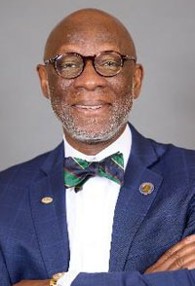
Barton chaired ASME’s Committee on Engineering Education, ASME’s Nominating Committee, served as a member of ASME Public Affairs and Outreach Council, and served as a member-at-large on the Engineering Accreditation Commission’s Executive Committee of ABET, after having served numerous years as a program evaluator and commissioner. Currently, he also serves on the ASME Foundation Board of Directors.
Barton is a Fulbright IEA HBCU Scholar-France & Senegal and Fulbright Specialist – France. Until recently, he served as a member on the Board of Trustees for Missouri University S & T, a member of the Army Education Advisory Committee, and Academic Advisory Council for ABET, National Action Council for Minorities in Engineering, ASEE Public Policy Committee, and the Global Engineering Deans Council. He is vice chair for the Council of HBCU Engineering Deans. He received a B.S. in mechanical engineering from Tuskegee (Institute) University, and a M.S. in mechanical engineering and Ph.D. in applied mechanics from Howard University.
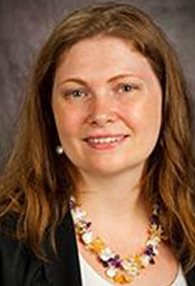
Betz currently serves as chair of the ASME Inclusion Strategy Committee and has been a member since 2020. On this committee, she helped create and disseminate the Inclusion Toolkit. She is also the student section advisor for Kansas State University. She was previously the conference chair for the International Conference on Nano, Micro, and Minichannels.
She received her Ph.D. and Master of Science in mechanical engineering from Columbia University, and a Bachelor of Science degree in mechanical engineering from The George Washington University.
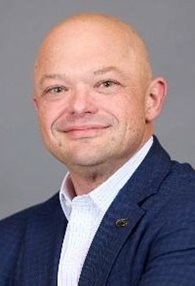
Previously, Martin led global product development and innovation portfolios for Westinghouse, overseeing large teams of engineers and researchers and advancing clean energy initiatives in areas such as hydrogen, energy storage, and next-generation reactor technologies.
With more than 25 years of experience in commercial nuclear power, advanced manufacturing, and robotics, Martin has held leadership roles across engineering, manufacturing, licensing, and global product management. He has led large, multidisciplinary teams and complex operations supporting critical nuclear infrastructure, with a consistent focus on improving operational performance, strengthening safety culture, and delivering high-quality, first-of-a-kind solutions.
An active member of the engineering community, Martin serves on the ASME Industry Advisory Board and contributes to industry initiatives focused on workforce development, energy innovation, and regulatory advancement. He has also collaborated with organizations such as the International Atomic Energy Agency and U.S. National Laboratories to support global energy and technology initiatives.
Martin holds a Master of Business Administration from the University of Pittsburgh Katz Graduate School of Business and a Bachelor of Science in mechanical engineering from the University of Pittsburgh.
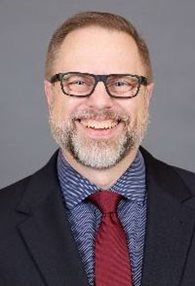
Webster is an active ASME volunteer and past chair of the Petroleum Division, where he restored fiscal sustainability by realigning expenditures with revenue and improving budget transparency. He has served on the Division's Executive Committee since 2019, with contributions across the Big Data for Oil & Gas, Digital Transformation in Oil & Gas, and Robotics Technology committees, conference leadership, scholarship review, and collegiate engagement. He contributed to ASME's STB 1-2020 Digital Transformation Guideline and has held leadership roles in the South Texas Section and Apollo Subsection.
Webster is a member of the American Society for Quality (ASQ) and has served in nonprofit governance as senior vice president and officer of the Mount Baker Council Board (BSA).
Webster earned an MBA from the University of St. Thomas, a Masters in industrial engineering from the University of Houston, and a B.S. in engineering science (mechanical) from Trinity University.
Explanation of Constitutional Amendments
The affairs of the Society shall be managed by a Board of Governors chosen from its membership which shall have full control of the activities of the Society, subject to the limitations of the Constitution and By-Laws, Society Policies and the laws of the State of New York. The voting members of the Board of Governors shall consist of the President, the most recent available past President, nine at least twelve and not more than fourteen membersat- large and the President elect (if not currently a member-at-large)., such members-at-large selected as follows:
- Twelve members-at-large elected from among the corporate members of the Society in the manner specified in C4.1.5 (“Elected Governors”).
- The nine members at-large In the discretion of the Board shall be elected from the corporate of Governors, up to two members-at-large, who need not be members of the Society, of Member grade or higher. The term of each member-at-large shall be three years, with the term of three members-at-large beginning and ending during the second Business Meeting of the fiscal year of the Society at a time designated annually by each appointed by the vote of a majority of the entire Board of Governors (each, an “Appointed Governor”) upon their determination that the size of the Board of Governors. may be fixed at thirteen or fourteen, as the case may be, to include a seat for the proposed appointee and that the proposed appointee has demonstrated substantial philanthropic support of the Society’s mission and sustained engagement with the field of engineering.
The “entire Board of Governors,” as such term is used in this Constitution, shall mean the total number of members-at-large entitled to vote which the Society would have if there were no vacancies. A seat vacated by an Appointed Governor, whether by expiration of his or her term, resignation, or otherwise, shall not be treated as a vacancy, and in such event, the size of the entire Board of Governors shall be fixed without regard to the seat until such time, if any, as the Board of Governors exercises its discretion under C4.1.1 to appoint a new Appointed Governor.
All members-at-large, whether elected or appointed, shall have the rights, privileges, and fiduciary duties granted or imposed by the laws of the State of New York.
The term of each member-at-large shall be three years, with the terms of four Elected Governors and an Appointed Governor, if any, beginning each year at the second Business Meeting of the fiscal year of the Society, at a time designated annually by the Board of Governors, thereby staggering the terms of the members-at-large in office as nearly equally as possible among the three classes.
Members-at-large of the Board of Governors All members-at-large shall be limited to one full term of service. Additional service as a member-at-large may occur after an interruption of one or more years or as a consecutive partial term.
The Executive Director/CEO shall be an ex officio member of the Board of Governors without vote.
The Officers of the Society shall consist of the President, the President elect, the past President who is serving on the Board of Governors, the members-at-large of the Board of Governors, the senior vice presidents, the vice presidents, the Executive Director/CEO, the Secretary, Treasurer, and such others as the Board of Governors may appoint.
The President shall be a corporate member of the Society who has reached at least the grade of Memberappointed by the Board of Governors from among the seated Elected Governors. He or she shall be electedappointed for a term of one year. The President may not serve more than one term except if he or she is appointed to fill a vacancy.