Reimagining Prosthetic Design
Reimagining Prosthetic Design
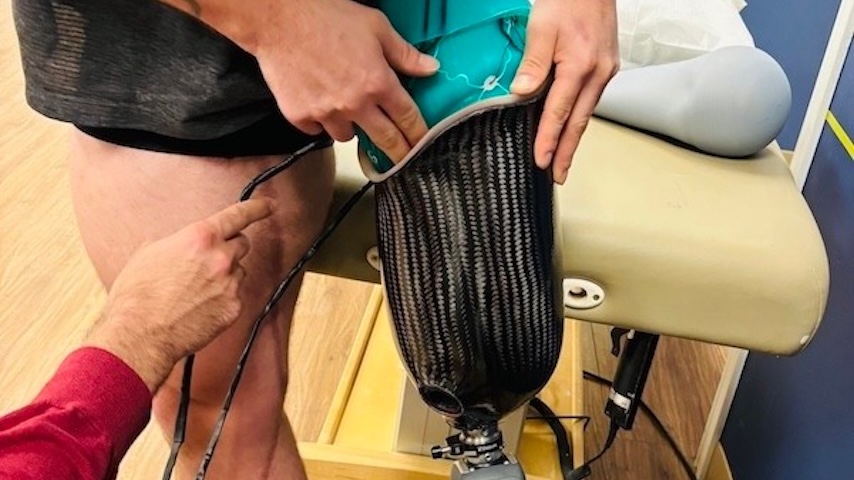
Smart tech and 3D printing transform socket design, making prosthetics lighter, more comfortable, and shaped by the patient's own movement.
A prosthetic socket is an interface that joins the patient’s residual limb to an artificial one, making it one of the most consequential design components to personalize. Get it wrong and the patient experiences pain. Get it right and mobility returns with ease.
Yet the traditional path to a well-fitting socket hasn’t changed much for patients. Their residual limbs are wrapped and cast with a mold, then refitted with a fabricated prosthetic, a process that usually takes three to four weeks. But now, key technology enablers, AI, digital twins, and 3D printing are accelerating time to mobility as modern practitioners swap plaster casts for printed polymers.
Digitizing a limb is only half the challenge. Customizing a 3D-printed socket into a cost-effective solution that addresses a decades-long problem—energy absorption—could revolutionize patient mobility and improve quality of life. To that end, Woo Soo Kim, a professor at Simon Fraser University’s School of Mechatronic Systems Engineering, and his teams have advanced a novel approach to create a fully customizable 3D printed socket design that’s lighter and optimized for personal wear.
Alongside industry and biomedical partners, Kim has spent the last three years developing a first-of-its-kind custom manufacturing process for 3D printed prostheses. The streamlined approach combines the best of pressure distribution 3D mapping, AI-assisted topology optimization, and a 3D-printed lattice infill to produce a mechanically strong socket in approximately 24 hours.
“Every patient has a custom shape to design around, and it usually takes weeks, from mold to fabrication,” Kim said. “We asked ourselves what if we could do this in a 24-hour window? It’s possible with emerging and accessible technologies like AI and 3D printing.”
While topology optimization “has been around,” long used in aerospace and automotive structural design, the SFU researchers were motivated to push its boundaries within the biomechatronics space and ultimately create a better socket design, faster.
According to Kim, 3D printing is a bridge technology for topology optimization. It democratizes the manufacturing process, bringing patients closer to their own prosthetics by personalizing how a socket fits according to their own movement.
“For the first time, this 3D printing technology is capturing unique pressure and force distribution data from a patient,” Kim said. Prosthetists can use the data from origami sensors measuring pressure and force to design a custom device in a digital twin and fabricate a much lighter, more breathable, and pressure-responsive socket.
The solution is a custom lattice structure—a pattern used for more than a century in bridge design. “We miniaturized this inside the socket thickness,” Kim explained. At its core, the workflow integrates optimization at multiple scales, refining the outer geometry for personalized fit while simultaneously tailoring microscale lattice structures to absorb energy and reduce localized stress. The result is a functionally graded lattice, less material than a solid wall, with density matched to the patient’s pressure map.
More for You: New Sound-Based 3D Printing Method Enables Finer, Faster Microdevices
As the patient moves, embedded sensors in a pressure-monitoring liner build a digital twin of the pressure field. Concentrated hotspots call for denser lattices. Low-pressure zones get aggressively thinned. An AI algorithm translates that pressure distribution directly into a variable-density lattice design, ready for print.
The final prototype demonstrated high energy absorption, meaning the lattice resists load rather than bending into fracture or fatiguing prematurely. “Even with a much lighter structure, we can obtain high mechanical strengths,” Kim said.
“Huge jumps” in mechanical strength and energy absorption surprised even Kim, who had modeled the lattice units to expect strong results. The 3D printed socket design using a latticed Gyroid infill was shown to absorb 1,600 percent more energy when standing compared to a traditional solid-infill socket, and 1,290 percent when walking.
The lighter, fully customized prototype “contributes to more positive patient outcomes," said Kim, adding that the prosthetic wearer who tested the device noticed an immediate difference from the traditional socket. “The combined lightness and strength was a wow moment for the patient,” he continued.
Discover the Benefits of ASME Membership
But the team doesn’t want to build another expensive subscription platform. “We want to make a cost-effective solution that’s scalable,” said Kim, pointing toward a potential open-source or open-access release so the biomedical community can build on the workflow collaboratively.
This research has application potential beyond the biomedical community, as 3D printed lattice structures could reshape professional sports gear as well as other weight-sensitive aerospace and automotive components. But the goal remains the same for every community who benefits from this engineering ingenuity: long-term quality of life.
“We want to make sure prosthetic solutions are more comfortable, more personalized, and more affordable and accessible to everyone who needs them,” Kim said.
Nancy Dunnahoe is an independent writer in Houston.
Yet the traditional path to a well-fitting socket hasn’t changed much for patients. Their residual limbs are wrapped and cast with a mold, then refitted with a fabricated prosthetic, a process that usually takes three to four weeks. But now, key technology enablers, AI, digital twins, and 3D printing are accelerating time to mobility as modern practitioners swap plaster casts for printed polymers.
Digitizing a limb is only half the challenge. Customizing a 3D-printed socket into a cost-effective solution that addresses a decades-long problem—energy absorption—could revolutionize patient mobility and improve quality of life. To that end, Woo Soo Kim, a professor at Simon Fraser University’s School of Mechatronic Systems Engineering, and his teams have advanced a novel approach to create a fully customizable 3D printed socket design that’s lighter and optimized for personal wear.
Alongside industry and biomedical partners, Kim has spent the last three years developing a first-of-its-kind custom manufacturing process for 3D printed prostheses. The streamlined approach combines the best of pressure distribution 3D mapping, AI-assisted topology optimization, and a 3D-printed lattice infill to produce a mechanically strong socket in approximately 24 hours.
“Every patient has a custom shape to design around, and it usually takes weeks, from mold to fabrication,” Kim said. “We asked ourselves what if we could do this in a 24-hour window? It’s possible with emerging and accessible technologies like AI and 3D printing.”
Bridging technologies
Topology optimization is a computational design method that finds the most efficient way to distribute material within a given volume to meet a defined set of loads and constraints. In practice, it tells an engineer where material needs to be and where it can be removed.While topology optimization “has been around,” long used in aerospace and automotive structural design, the SFU researchers were motivated to push its boundaries within the biomechatronics space and ultimately create a better socket design, faster.
According to Kim, 3D printing is a bridge technology for topology optimization. It democratizes the manufacturing process, bringing patients closer to their own prosthetics by personalizing how a socket fits according to their own movement.
“For the first time, this 3D printing technology is capturing unique pressure and force distribution data from a patient,” Kim said. Prosthetists can use the data from origami sensors measuring pressure and force to design a custom device in a digital twin and fabricate a much lighter, more breathable, and pressure-responsive socket.
The solution is a custom lattice structure—a pattern used for more than a century in bridge design. “We miniaturized this inside the socket thickness,” Kim explained. At its core, the workflow integrates optimization at multiple scales, refining the outer geometry for personalized fit while simultaneously tailoring microscale lattice structures to absorb energy and reduce localized stress. The result is a functionally graded lattice, less material than a solid wall, with density matched to the patient’s pressure map.
More for You: New Sound-Based 3D Printing Method Enables Finer, Faster Microdevices
As the patient moves, embedded sensors in a pressure-monitoring liner build a digital twin of the pressure field. Concentrated hotspots call for denser lattices. Low-pressure zones get aggressively thinned. An AI algorithm translates that pressure distribution directly into a variable-density lattice design, ready for print.
The final prototype demonstrated high energy absorption, meaning the lattice resists load rather than bending into fracture or fatiguing prematurely. “Even with a much lighter structure, we can obtain high mechanical strengths,” Kim said.
“Huge jumps” in mechanical strength and energy absorption surprised even Kim, who had modeled the lattice units to expect strong results. The 3D printed socket design using a latticed Gyroid infill was shown to absorb 1,600 percent more energy when standing compared to a traditional solid-infill socket, and 1,290 percent when walking.
Positive patient outcomes
Every bit of weight a patient doesn’t have to carry reduces the pain and discomfort of ulcers or osteoarthritis during long-term wear.The lighter, fully customized prototype “contributes to more positive patient outcomes," said Kim, adding that the prosthetic wearer who tested the device noticed an immediate difference from the traditional socket. “The combined lightness and strength was a wow moment for the patient,” he continued.
Discover the Benefits of ASME Membership
But the team doesn’t want to build another expensive subscription platform. “We want to make a cost-effective solution that’s scalable,” said Kim, pointing toward a potential open-source or open-access release so the biomedical community can build on the workflow collaboratively.
This research has application potential beyond the biomedical community, as 3D printed lattice structures could reshape professional sports gear as well as other weight-sensitive aerospace and automotive components. But the goal remains the same for every community who benefits from this engineering ingenuity: long-term quality of life.
“We want to make sure prosthetic solutions are more comfortable, more personalized, and more affordable and accessible to everyone who needs them,” Kim said.
Nancy Dunnahoe is an independent writer in Houston.
Smart tech and 3D printing transform socket design, making prosthetics lighter, more comfortable, and shaped by the patient's own movement.

Freelance writer
Related Content

Sep 1, 2026
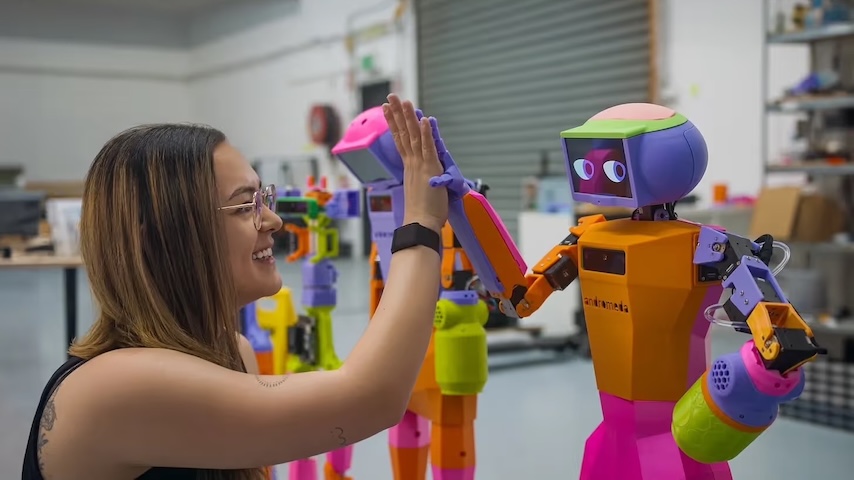
The Next Robotics Frontier


The robotics industry often focuses on scale, automation, and valuations. But a quieter group of founders is instead asking what robotics have overlooked as they innovate with compassion in mind.
Aug 20, 2026
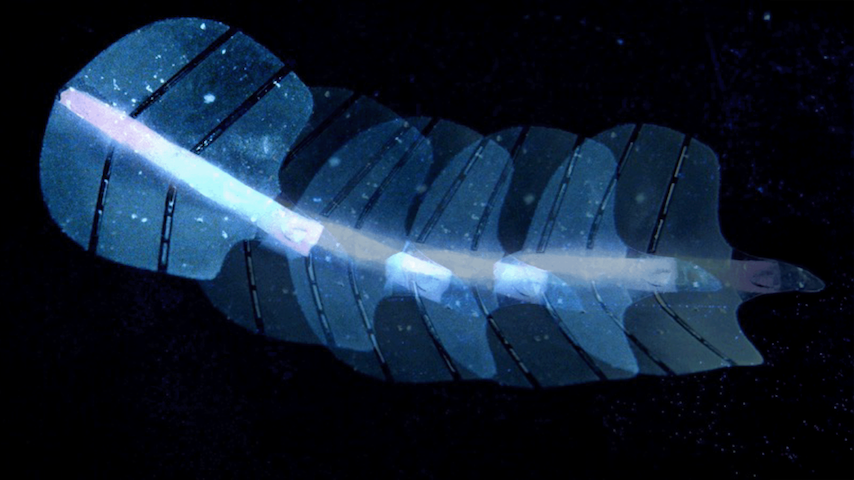
Artificial Muscles That Move to Sound

Microbubbles of varying sizes embedded in polymers have different acoustic responses, which can help move artificial muscles made from this material.
.png?width=854&height=480&ext=.png)
Aug 6, 2026
New Sound-Based 3D Printing Method Enables Finer, Faster Microdevices

Using sound instead of lasers or heat, this emerging technique delivers ultra-precise, in situ 3D printing with transformative biomedical potential.
Jul 14, 2026
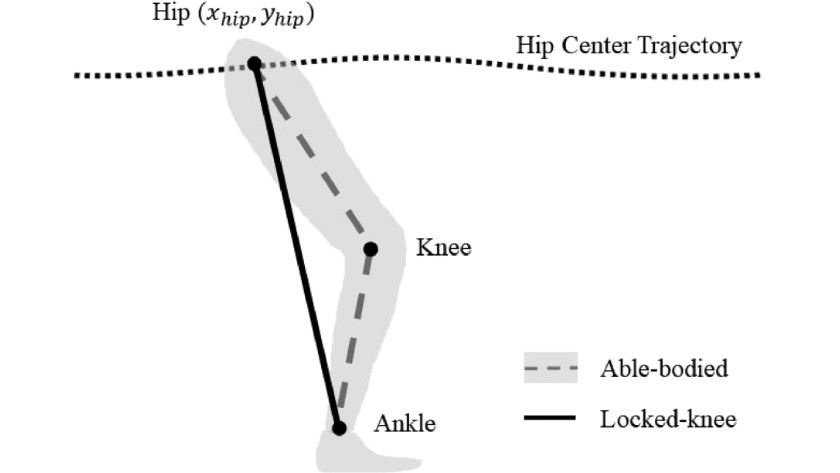
A Better Step for People with Above-Knee Amputations

MIT researchers designed an affordable prosthetic foot that helps people with above-knee amputations achieve a more natural stride.