Bubbles to Gently Scrub Algae Bioreactors
Bubbles to Gently Scrub Algae Bioreactors
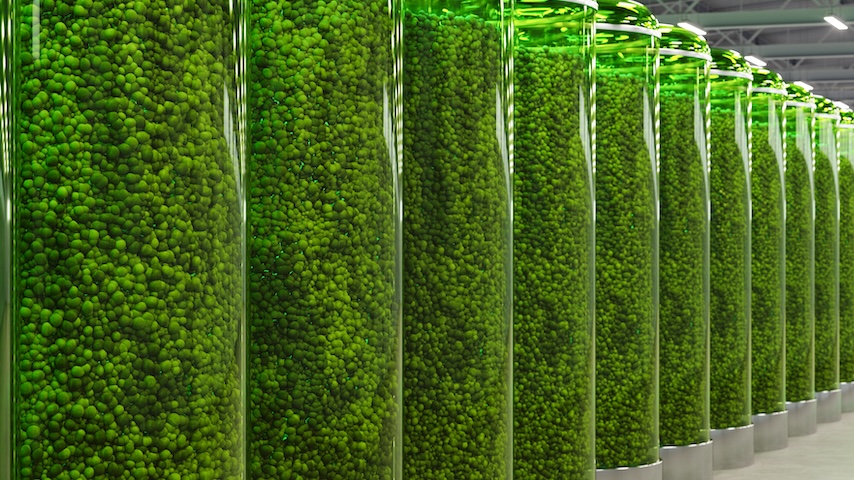
Electrochemically generated bubbles are the key to a new nontoxic defouling method.
Unwanted cell adhesion is a sticky problem for cultivating algae and mammalian cell culture. As microorganisms flourish, they can form dense and counterproductive accumulations on surfaces. However, the traditional methods to remove these organic deposits result in costly downtime, wasted material, or harmful chemicals.
A team of researchers at the Massachusetts Institute of Technology has demonstrated an alternative way to safely detach cells—electrochemically generated bubbles. Professor Kripa Varanasi is the senior author of the study, along with co-first authors Bert Vandereydt, a doctoral student in mechanical engineering, and former postdoc Baptiste Blanc.
Their prototype is an important step toward preserving biological resources that are destined for vaccine development, cosmetics, dietary supplements, gene therapies, and biofuel.
Algae’s adhesive properties are thanks to a biological coating called mucilage, the same thick substance found in aloe vera and okra. This inherent stickiness is one of the ways they create a layer of film.
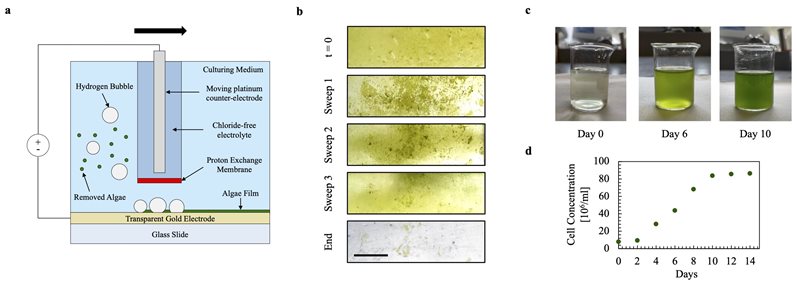 Bubbles generated by electricity have enough force to dislodge algae without destroying the cells. Photo: MIT
“The long sugar chains of mucilage carry a negative electronic charge, which is how algae attach to materials like a ship’s hull,” Vandereydt added.
Bubbles generated by electricity have enough force to dislodge algae without destroying the cells. Photo: MIT
“The long sugar chains of mucilage carry a negative electronic charge, which is how algae attach to materials like a ship’s hull,” Vandereydt added.
However, scrubbing algae is time and labor intensive. A total system shutdown is required to manually clean a bioreactor, which can occur several times a month.
Mammalian cell culture also suffers from a similar clumping problem. Yet the common response of deploying an enzyme treatment carries the risk of damaging cell membranes.
Discover the Benefits of ASME Membership
“Pharmaceutical operations waste approximately 300 million liters of liquid cell culture annually, in part because of these enzymatic approaches,” Varanasi explained. “Lost productivity and the cost of treatment solutions compound this issue further.”
Varanasi’s group was inspired to work on a hands-off defouling option because of their passion for CO2 capture, which is an environmental benefit of algae bioreactors. Focusing on boiling research for industrial applications, they study the “physico-chemical phenomena at interfaces,” per their website. They have explored technologies such as using electrostatic wipes as a waterless way to clean solar panels and enhancing the ability to harvest water from fog generated by cooling towers through electrically charged particles.
This emphasis on fluid dynamics is what led them to employ bubbles as a harmless but effective way to facilitate on-demand cell detachment.
“We found that electrochemically generated bubbles create enough shear stress to dislodge living cells without harming or killing them,” Varanasi said.
This bubble action can be observed with the naked eye whenever champagne or a carbonated beverage is poured into a glass. As bubbles lift from a surface, they create a small trail behind them. This flow movement is what Varanasi’s team produces and then directs at biological accumulation.
As electricity flows through a transparent gold electrode only 10 nanometers thick, the film separates water into its hydrogen and oxygen atoms. The resulting gas forms bubbles that can physically displace cells.
To achieve these results, the researchers experimented with both bubble rates and radius on varying growth densities. They verified the impact on fresh and saltwater algae species as well as two types of human cancer cells.
“We’re also excited that this electrolysis strategy avoids creating chloride ions,” Vandereydt noted. “This is a prevalent issue for marine algae, which grows in saltwater, and can easily be destroyed by a biocide like bleach.”
“Due to their size and complexity, we are unlikely to launch directly into biofuel reactors. However, mammalian cell culture and small bioreactors are more feasible,” Vandereydt shared. “For example, oyster farms are a good use case because they grow algae as a food source.”
So the next time you buy spirulina as a health food supplement or use a body cream with chlorella vulgaris in the ingredients, bubbles might have played a key role in its production.
Jennie Morton is an engineering and construction writer based in Iowa.
A team of researchers at the Massachusetts Institute of Technology has demonstrated an alternative way to safely detach cells—electrochemically generated bubbles. Professor Kripa Varanasi is the senior author of the study, along with co-first authors Bert Vandereydt, a doctoral student in mechanical engineering, and former postdoc Baptiste Blanc.
Their prototype is an important step toward preserving biological resources that are destined for vaccine development, cosmetics, dietary supplements, gene therapies, and biofuel.
A sticky problem
Bioreactor fouling is a pervasive problem when growing algae. Transparent glass or plastic tubes permit the light necessary for photosynthesis. But like moths to a flame, algae will cling to the surface and ultimately block the very light that sustains them.Algae’s adhesive properties are thanks to a biological coating called mucilage, the same thick substance found in aloe vera and okra. This inherent stickiness is one of the ways they create a layer of film.
Bubbles generated by electricity have enough force to dislodge algae without destroying the cells. Photo: MIT
However, scrubbing algae is time and labor intensive. A total system shutdown is required to manually clean a bioreactor, which can occur several times a month.
Mammalian cell culture also suffers from a similar clumping problem. Yet the common response of deploying an enzyme treatment carries the risk of damaging cell membranes.
Discover the Benefits of ASME Membership
“Pharmaceutical operations waste approximately 300 million liters of liquid cell culture annually, in part because of these enzymatic approaches,” Varanasi explained. “Lost productivity and the cost of treatment solutions compound this issue further.”
Varanasi’s group was inspired to work on a hands-off defouling option because of their passion for CO2 capture, which is an environmental benefit of algae bioreactors. Focusing on boiling research for industrial applications, they study the “physico-chemical phenomena at interfaces,” per their website. They have explored technologies such as using electrostatic wipes as a waterless way to clean solar panels and enhancing the ability to harvest water from fog generated by cooling towers through electrically charged particles.
This emphasis on fluid dynamics is what led them to employ bubbles as a harmless but effective way to facilitate on-demand cell detachment.
An uplifting solution
Bubbles have a strong association with cleaning. They are used as a dispersant in personal care products like toothpaste and hand soap, creating the satisfying sensation of a rich shampoo lather or suds swishing in the laundry machine. But the bubbles generated by Varanasi’s team are intentionally free of chemicals and heat.“We found that electrochemically generated bubbles create enough shear stress to dislodge living cells without harming or killing them,” Varanasi said.
This bubble action can be observed with the naked eye whenever champagne or a carbonated beverage is poured into a glass. As bubbles lift from a surface, they create a small trail behind them. This flow movement is what Varanasi’s team produces and then directs at biological accumulation.
As electricity flows through a transparent gold electrode only 10 nanometers thick, the film separates water into its hydrogen and oxygen atoms. The resulting gas forms bubbles that can physically displace cells.
To achieve these results, the researchers experimented with both bubble rates and radius on varying growth densities. They verified the impact on fresh and saltwater algae species as well as two types of human cancer cells.
“We’re also excited that this electrolysis strategy avoids creating chloride ions,” Vandereydt noted. “This is a prevalent issue for marine algae, which grows in saltwater, and can easily be destroyed by a biocide like bleach.”
Next steps for scaling
Varanasi’s team is exploring how to implement their solution into a working industrial environment. They are looking at questions like the long-term durability of components and bubble behavior in different liquid mediums. The team is also evaluating which high-value applications to target initially.“Due to their size and complexity, we are unlikely to launch directly into biofuel reactors. However, mammalian cell culture and small bioreactors are more feasible,” Vandereydt shared. “For example, oyster farms are a good use case because they grow algae as a food source.”
So the next time you buy spirulina as a health food supplement or use a body cream with chlorella vulgaris in the ingredients, bubbles might have played a key role in its production.
Jennie Morton is an engineering and construction writer based in Iowa.
Electrochemically generated bubbles are the key to a new nontoxic defouling method.

Freelance writer based in Iowa
Related Content

Jun 18, 2026
Superconductors Reimagined


Reimagined superconductors could deliver zero-resistance power under real-world conditions. The solution lies in the substrate.
May 12, 2026
The End of Brittle Solar

Flexible carbon nanotubes replace brittle ITO in perovskite solar cells, boosting durability, efficiency, and lowering costs for next generation renewables.

Apr 15, 2026
Blog: ASME ST-LLC’s Role in Shaping Tomorrow

A look at two projects at ASME STLLC, whose mission is to provide new standards-related products and services to advance the application of emerging and newly commercialized science and technology.
Feb 11, 2026
Paper Mills Have a Path to Net Zero, Researchers Say


New NCSU research outlines how electrification and efficiency improvements could help paper mills reach net-zero emissions.