ASME’s Piping and Pipeline Engineering Program
Earn microcredentials to demonstrate expertise in codes governing pipeline systems.
Build rigorous knowledge of the engineering principles and Code requirements needed for design, materials and construction, and post-construction of industrial piping systems and transmission pipelines and showcase your skills and expertise in the industry
Is this program for you?
Professionals involved in designing industrial piping, as well as those who build and maintain pipelines benefit from gaining specific knowledge of the ASME piping and pipeline code to guide design and project execution. This includes roles such as piping and pipeline engineers, project engineers, and other technical professionals working in the power, oil & gas, petrochemical, and chemical process.

Safety
performing bolted flange joint assembly using practices that are based on providing adequate gasket stress has been shown to reduce the quantity of leaks in a facility.

Reliability
trained professionals are more likely to produce consistent results and result in better equipment availability and less down time.

Efficiency
improving quality of work productively contributes to reduced downtown during maintenance activities

Quality Assurance
understanding and implementing quality control measures ensure that approved specifications and procedures are being executed as planned.
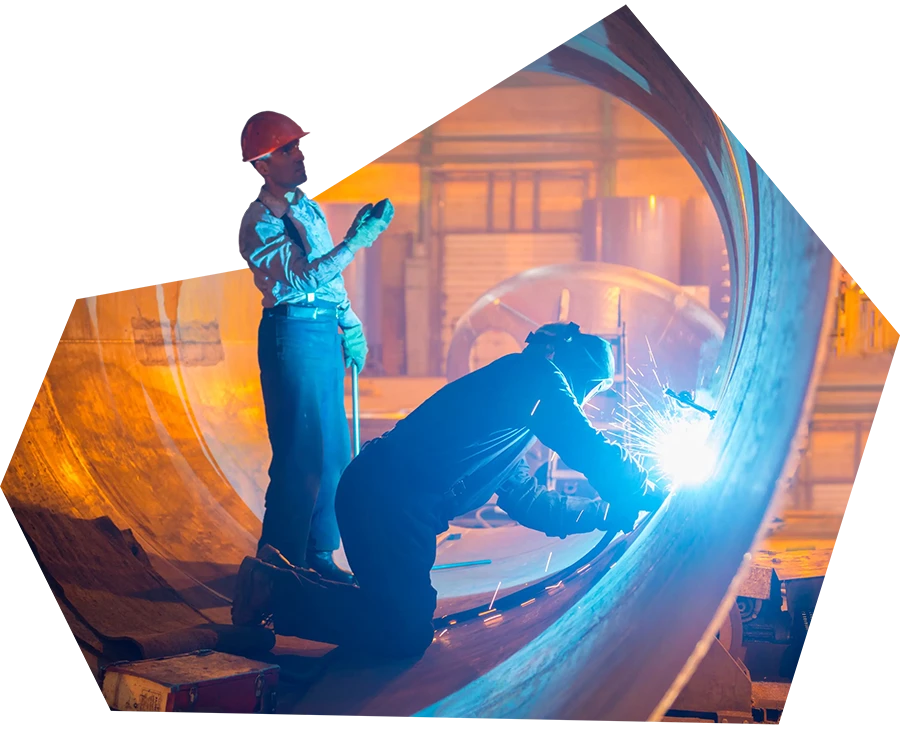
ASME’s Piping and Pipeline engineering program
Learning pipeline engineering from an ASME educator provides formal on demand training to master and apply topics and concepts covered in ASME codes ASME B31.1 Power Piping, ASME B31.3 Process Piping, ASME B31.4 Pipeline Transportation Systems for Liquids and Slurries, ASME B31.8 Gas Transmission and Distribution Piping Systems.
Learn more about the three levels of training for an engineer to design, construct, test, and maintain
Learn how to describe and understand the ASME codes for piping and pipelines focusing on code intent, design rules, and practical applications.
Build applicable experience implementing ASME B31 codes in material selection, specification, welding, joining, examination, and pressure testing to ensure safe, compliant, and reliable piping and pipeline systems.
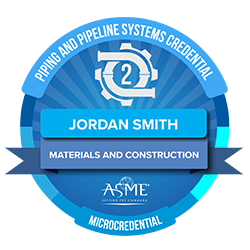
Showcase your microcredential with an ASME Digital Badge
Receiving a microcredential in Piping and Pipeline Engineering will contribute to skills development, safety, and performance of individuals and companies responsible for the design, construction, and testing and maintenance of industrial pipelines.



FAQs
Microcredentials are specialized training programs that provides individuals with a digital badge or certificate upon completion of a learning program focusing on a specific skill or set of skills.
Learners are required to complete the online material and pass the course with a score of 75% or higher.
Microcredentials and qualifications differ in scope, duration and focus.
Micocredentials are designed to be completed relatively quickly, targeted at specific skills and result in a digital badge or certificate.
Qualifications involve a more extensive period of study, cover a broader range of subjects and result in a formal credential.
Micocredentials are designed to be completed relatively quickly, targeted at specific skills and result in a digital badge or certificate.
Qualifications involve a more extensive period of study, cover a broader range of subjects and result in a formal credential.
It’s easy to share your digital badge. Once you meet your completion criteria, you will receive an email with instructions on how to:
- Share it on social media
- Add it to your LinkedIn profile
- Embed it in your email signature
- Add it to your digital resume
- Upload it to your smartphone wallet