Root Causes and Failure Analyses
Root Causes and Failure Analyses
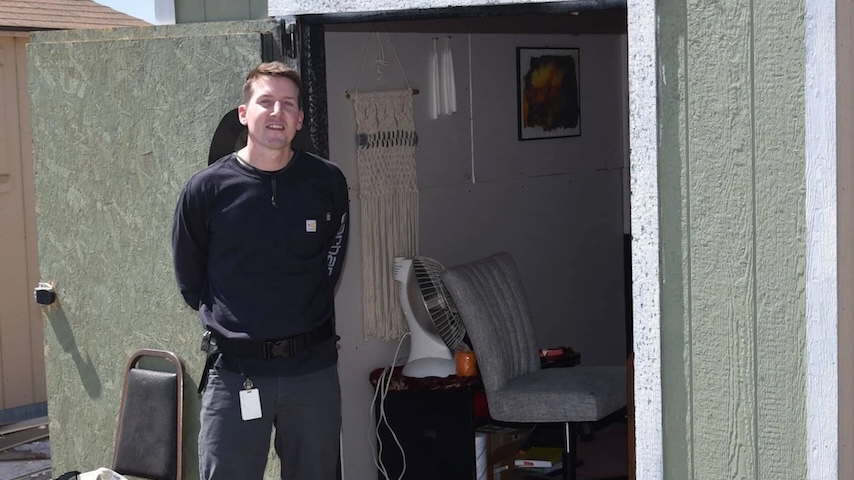
This thermal scientist investigates fires and explosions, finds root causes, and adds to the critical knowledge of thermal and flow-related accidents.
Our energy-dense world is getting hotter. From the technology we slip into our coat pockets to the data centers that crunch enormous amounts of information, there are engineers who work in the field of thermal science to make the next decade of technology safer, healthier, and sustainable.
As a thermal scientist, Colin Reagle investigates the root causes of failures, fires, and explosions for all types of accidents within residential settings, commercial enterprises, and large transportation systems. He specializes in performing failure analyses and providing design support, and problem-solving from the technical lens of thermal fluid flows and energy systems.
 Colin Reagle
“We often work at the extremes where people are pushing the boundaries of size and performance,” Reagle explained of his work at Exponent as a managing engineer in the Thermal Sciences practice with consultants dedicated to examining failures and providing steps to make solutions safer. He gave the example of consumer devices that are becoming smaller and more energy dense. At the other extreme are systems with greater automation and often large stores of energy. “These changes can impact safety or lead to new interactions that aren’t fully understood,” said Reagle, a professional engineer and certified fire and explosion investigator.
Colin Reagle
“We often work at the extremes where people are pushing the boundaries of size and performance,” Reagle explained of his work at Exponent as a managing engineer in the Thermal Sciences practice with consultants dedicated to examining failures and providing steps to make solutions safer. He gave the example of consumer devices that are becoming smaller and more energy dense. At the other extreme are systems with greater automation and often large stores of energy. “These changes can impact safety or lead to new interactions that aren’t fully understood,” said Reagle, a professional engineer and certified fire and explosion investigator.
“There are a lot of complex and intertwined drivers for these types of events,” he said. “Climate change is increasing dry fuel loads and severe weather events—slowing climate change requires more clean energy adoption, which necessitates more energy storage.”
No one could have fully understood how much change would occur in thermal science either, added Reagle. “Meanwhile, consumers are demanding longer life and more performance from their devices and vehicles. Widespread adoption of safer battery technology will be a significant disruptor to our field,” he said, noting that these challenges bring opportunities for those open to studying situations that demand safer solutions.
Discover the Benefits of ASME Membership
“When I discovered engineering in high school, it gave a purpose and a direction to my interest and abilities,” Reagle said. At that age, he thought he wanted to engineer cars, and it was mechanical engineering that introduced him to thermodynamics, fluids, and heat transfer. “That made me look at engines and energy differently and realize why I was interested in cars in the first place,” he continued.
Although getting a doctorate was never something Reagle had planned, setbacks ultimately led him down that path. After teaching at both Virginia Tech and George Mason University, he developed a knack for explaining difficult concepts to a wide range of audiences. He described his work with Exponent as a way to apply his knowledge in a new way.
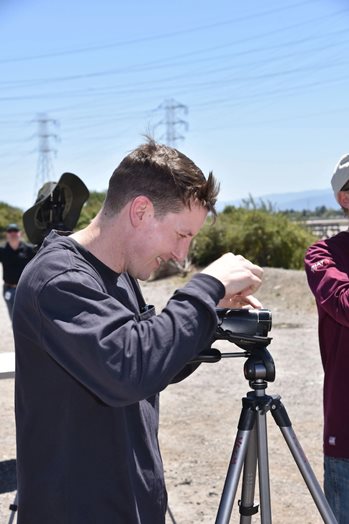 Reagle sets up a scenario to test students on where a fire started and what caused it. Photo: Colin Reagle
While his journey has not been straightforward, Reagle credits working with “a lot of great engineers,” among them ASME members such as Wing Ng, Srinath Ekkad, Ken Ball, Oscar Barton, Leigh McCue, and Abid Kemal. His advice to those deciding on mechanical engineering as a field of study is still simple: “Show Up.” So much of engineering and success is about taking the first step, he said.
Reagle sets up a scenario to test students on where a fire started and what caused it. Photo: Colin Reagle
While his journey has not been straightforward, Reagle credits working with “a lot of great engineers,” among them ASME members such as Wing Ng, Srinath Ekkad, Ken Ball, Oscar Barton, Leigh McCue, and Abid Kemal. His advice to those deciding on mechanical engineering as a field of study is still simple: “Show Up.” So much of engineering and success is about taking the first step, he said.
“Being ready physically, mentally, and emotionally to tackle the challenge at hand” is what’s really required, Reagle explained. “When I was a kid and woke up feeling less than 100 percent, my parents would still make me get out of bed and get ready for the day. If I still wasn’t feeling well, I would stay home. But nine times out of 10, I’d end up going to school, and making that initial move was all it took to change the course of the day,” he said.
“When it comes to engineers and technology, there is always a worry about how new technology, say artificial intelligence, will be used and how it will help engineers to better understand new concepts and increase the reward for their efforts,” he said. “But I’m cautiously optimistic because these technologies also present a path of decreasing the effort future engineers have to input to achieve a similar result. The risk is that they skip over developing the knowledge to understand it.”
Cathy Cecere is membership content program manager.
As a thermal scientist, Colin Reagle investigates the root causes of failures, fires, and explosions for all types of accidents within residential settings, commercial enterprises, and large transportation systems. He specializes in performing failure analyses and providing design support, and problem-solving from the technical lens of thermal fluid flows and energy systems.
Today’s world
In the May issue of Mechanical Engineering, a professor explained that car battery production needs to be close to automobile assembly plants, not because of convenience, but because of the risk batteries pose of exploding during transport. Reagle, who holds a bachelor’s, master’s, and doctorate in mechanical engineering from Virginia Polytechnic Institute, focuses on such real-world scenarios. He looks at devices and systems, and why so many of the broader trends in society, technology, and machines end up at his company’s doorstep.
Colin Reagle
Thermal science career
Of all the subjects on which thermal scientists focus their time, two of the most prevalent are happening more frequently—the first in nature (wildfires) and the second in human-engineered systems (battery thermal events). Both have made a significant impact on Reagle’s practice at Exponent.“There are a lot of complex and intertwined drivers for these types of events,” he said. “Climate change is increasing dry fuel loads and severe weather events—slowing climate change requires more clean energy adoption, which necessitates more energy storage.”
No one could have fully understood how much change would occur in thermal science either, added Reagle. “Meanwhile, consumers are demanding longer life and more performance from their devices and vehicles. Widespread adoption of safer battery technology will be a significant disruptor to our field,” he said, noting that these challenges bring opportunities for those open to studying situations that demand safer solutions.
Discover the Benefits of ASME Membership
“When I discovered engineering in high school, it gave a purpose and a direction to my interest and abilities,” Reagle said. At that age, he thought he wanted to engineer cars, and it was mechanical engineering that introduced him to thermodynamics, fluids, and heat transfer. “That made me look at engines and energy differently and realize why I was interested in cars in the first place,” he continued.
Although getting a doctorate was never something Reagle had planned, setbacks ultimately led him down that path. After teaching at both Virginia Tech and George Mason University, he developed a knack for explaining difficult concepts to a wide range of audiences. He described his work with Exponent as a way to apply his knowledge in a new way.
Reagle sets up a scenario to test students on where a fire started and what caused it. Photo: Colin Reagle
“Being ready physically, mentally, and emotionally to tackle the challenge at hand” is what’s really required, Reagle explained. “When I was a kid and woke up feeling less than 100 percent, my parents would still make me get out of bed and get ready for the day. If I still wasn’t feeling well, I would stay home. But nine times out of 10, I’d end up going to school, and making that initial move was all it took to change the course of the day,” he said.
Optimistic about the future
Reagle said it was always satisfying to work with younger MEs to help them understand the world, especially when a “concept clicks or their efforts are rewarded when a code starts to run.” His experience with these young professionals makes him optimistic about the future, but with cautious trepidation.“When it comes to engineers and technology, there is always a worry about how new technology, say artificial intelligence, will be used and how it will help engineers to better understand new concepts and increase the reward for their efforts,” he said. “But I’m cautiously optimistic because these technologies also present a path of decreasing the effort future engineers have to input to achieve a similar result. The risk is that they skip over developing the knowledge to understand it.”
Cathy Cecere is membership content program manager.
This thermal scientist investigates fires and explosions, finds root causes, and adds to the critical knowledge of thermal and flow-related accidents.

Membership content program manager for ASME
Related Content


Feb 6, 2026
Grit and Persistence Are Critical for Engineering
Multiple setbacks have not stopped this ASME Member from embracing opportunity and pursuing a graduate degree in engineering.


Feb 6, 2026
Quiz: Engineers at the Winter Games
Test your knowledge about engineer-athletes competing at the highest level of sport.

Feb 5, 2026
Engineers are Optimistic, but AI Skills Gaps Continue
U.S. STEM professionals remain cautiously optimistic, but AI skills gaps and governance issues highlight the need for stronger training and workforce strategies.

Feb 4, 2026
Paying Mechanical Engineers in Professional Services

Mechanical engineers who work in professional services deliver complex projects and deliverables. Add retiring staff and wages are up and are expected to rise.