Pivoting to a New Industry
Pivoting to a New Industry
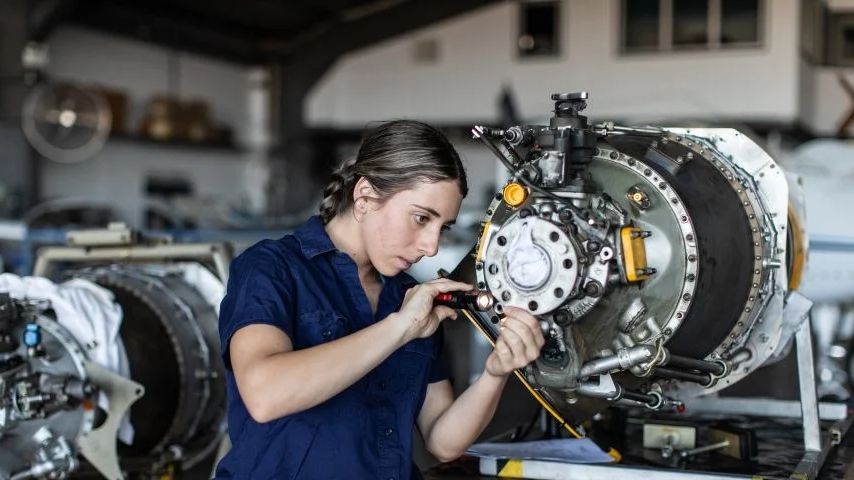
Mechanical engineers are uniquely positioned to shift into fast-growing sectors.
Maybe work that once felt exciting is now feeling stale. New engineering trends may make you wonder whether it’s time to try something different.
Whatever the reason for considering an occupational tuneup, switching industries—while potentially intimidating—can be a good move.
“Many times, as engineers, we can be very myopic,” said Alex Isidro, a mechanical engineer and online entrepreneur based in Fairfax, Va. “We can get caught up in the details of the technical work we do and undermine our own value. But we need to expose ourselves to new adventures, to see what else is out there.”
While fundamentals such as systems thinking, CAD and analytics apply to almost every industry, demand for mechanical engineers is growing in robotics and automation, advanced materials, sustainability and energy, and other emerging sectors.
That means there are many opportunities to pivot. The field is especially wide open for mechanical engineers at the start of their careers when their knowledge is less specialized. Midcareer industry changes may be more challenging, although a course, certification, or a few months of training may be all that is required to become qualified and competitive.
The options are almost endless, Isidro said. “Like factory settings, the mechanical engineering degree coursework gives insight into many different fields,” he said. “It’s an advantage—and it’s up to [the engineer], given that background, to make the transition seamlessly.”
Evan Kawamura, a mechanical engineer who made the leap from nuclear engineering to aerospace in California’s Silicon Valley, shared his main piece of advice for making the most of a sector switch: Realize that successfully shifting to a different industry has little to do with technical expertise.
“It all comes down to the company’s culture and your ability to integrate into it, like a puzzle piece snapping effortlessly together with the others,” he said. Kawamura worked as an intern alongside nuclear engineers on submarines before transitioning to an aerospace engineering internship related to his graduate studies.
“Most people were in a constant mode of innovation, creativity, exploration, wonder, deep thought, critical thinking, and coming up with new ideas and solutions that never existed before,” he said. “It was very exhilarating... to have the same mindset and drive.”
 Isidro said he started by thinking of himself as a business and then marketing himself. “The best time to look for a job is when you have a job,” he said. “That way, when an opportunity comes up, you can act from a place of confidence and clarity.”
It helps that many growing industries are actively recruiting engineers. “When you put yourself out there, recruiters will reach out to you,” Isidro continued. “Then once you actually do need a job, let’s say down the road, now you have people you can reach out to directly. You’re establishing your network when you don’t need it, so that it’s there when you do.”
But first, be sure to tailor your resume to the industry you want to enter. Isidro suggested feeding your skills, along with a description of your desired job, into an AI tool. Candidates should also use simple, applicant tracking system-friendly formatting.
“AI will help you build a bridge from where you are to where you want to go,” Isidro said. “Not only is it going to give you new insight, it’s also going to boost your confidence.”
That confidence can help convey both competence and self-respect. “Going into a new industry where people don’t know you can be nerve-wracking, but remember, don’t undermine yourself,” Isidro said.
Kawamura agreed but emphasized the importance of focusing on the bigger picture—the company culture. “Your technical skills and expertise get your feet wet, but immersing yourself in the company culture is what allows you to dive in and have the full-body experience that leads to success and seamless integration,” he said. “Without that cultural immersion, you can stay stuck on the surface—making it harder to truly thrive and grow in your new role.”
Robin L. Flanigan is an independent writer in Rochester, N.Y.
Whatever the reason for considering an occupational tuneup, switching industries—while potentially intimidating—can be a good move.
Many options
“Many times, as engineers, we can be very myopic,” said Alex Isidro, a mechanical engineer and online entrepreneur based in Fairfax, Va. “We can get caught up in the details of the technical work we do and undermine our own value. But we need to expose ourselves to new adventures, to see what else is out there.”
While fundamentals such as systems thinking, CAD and analytics apply to almost every industry, demand for mechanical engineers is growing in robotics and automation, advanced materials, sustainability and energy, and other emerging sectors.
That means there are many opportunities to pivot. The field is especially wide open for mechanical engineers at the start of their careers when their knowledge is less specialized. Midcareer industry changes may be more challenging, although a course, certification, or a few months of training may be all that is required to become qualified and competitive.
The options are almost endless, Isidro said. “Like factory settings, the mechanical engineering degree coursework gives insight into many different fields,” he said. “It’s an advantage—and it’s up to [the engineer], given that background, to make the transition seamlessly.”
Evan Kawamura, a mechanical engineer who made the leap from nuclear engineering to aerospace in California’s Silicon Valley, shared his main piece of advice for making the most of a sector switch: Realize that successfully shifting to a different industry has little to do with technical expertise.
“It all comes down to the company’s culture and your ability to integrate into it, like a puzzle piece snapping effortlessly together with the others,” he said. Kawamura worked as an intern alongside nuclear engineers on submarines before transitioning to an aerospace engineering internship related to his graduate studies.
Take advantage of need
“Most people were in a constant mode of innovation, creativity, exploration, wonder, deep thought, critical thinking, and coming up with new ideas and solutions that never existed before,” he said. “It was very exhilarating... to have the same mindset and drive.”
ASME Career Center
Guidance for every step of your career journey.
It helps that many growing industries are actively recruiting engineers. “When you put yourself out there, recruiters will reach out to you,” Isidro continued. “Then once you actually do need a job, let’s say down the road, now you have people you can reach out to directly. You’re establishing your network when you don’t need it, so that it’s there when you do.”
But first, be sure to tailor your resume to the industry you want to enter. Isidro suggested feeding your skills, along with a description of your desired job, into an AI tool. Candidates should also use simple, applicant tracking system-friendly formatting.
“AI will help you build a bridge from where you are to where you want to go,” Isidro said. “Not only is it going to give you new insight, it’s also going to boost your confidence.”
That confidence can help convey both competence and self-respect. “Going into a new industry where people don’t know you can be nerve-wracking, but remember, don’t undermine yourself,” Isidro said.
Kawamura agreed but emphasized the importance of focusing on the bigger picture—the company culture. “Your technical skills and expertise get your feet wet, but immersing yourself in the company culture is what allows you to dive in and have the full-body experience that leads to success and seamless integration,” he said. “Without that cultural immersion, you can stay stuck on the surface—making it harder to truly thrive and grow in your new role.”
Robin L. Flanigan is an independent writer in Rochester, N.Y.


Learning is a lifelong journey. Explore our growing collection of free learning resources and articles.