Is AI a Help or Hurdle for Engineers Looking to Get Hired?
Is AI a Help or Hurdle for Engineers Looking to Get Hired?
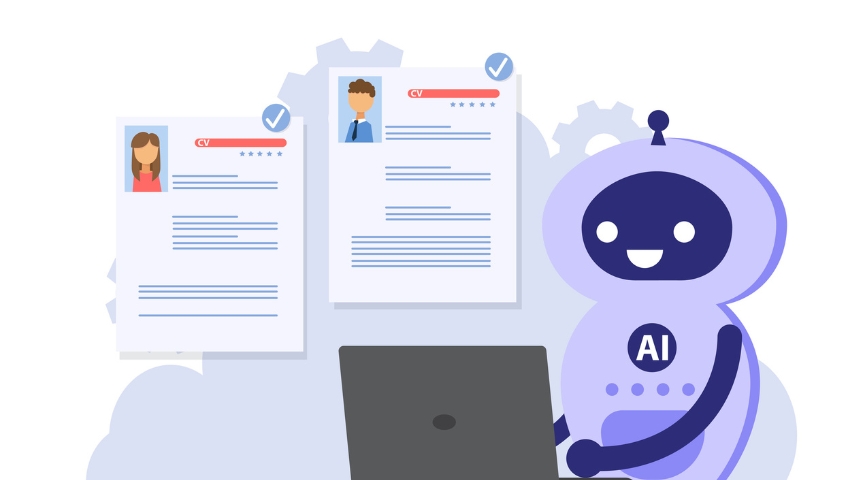
As AI tools reshape hiring, mechanical engineers need to understand how algorithms screen resumes, match skills to job descriptions, and influence who gets a closer look.
Job-seeking mechanical engineers are likely to encounter artificial intelligence (AI) along the way. But how exactly is AI being used in the hiring process?
The most common uses are at the front end of the process, according to Erik Brynjolfsson, Stanford University professor, senior fellow at Stanford’s Institute for Human-Centered Artificial Intelligence, and co-founder of Workhelix. However, AI is also being used throughout the hiring funnel.
“Employers use it to write job descriptions, source candidates, scan resumes, match skills to job requirements, summarize portfolios or work samples, and sometimes to help structure interviews or evaluate responses,” Brynjolfsson said. “For mechanical engineers specifically, I would expect AI to be most useful where the job requirements can be described in terms of concrete skills: CAD, simulation, materials, manufacturing processes, robotics, controls, thermodynamics, or experience with particular software and design environments.”
AI tools can help employers increase the efficiency of their hiring processes. They can review more candidates in less time, and they might even find people they would have otherwise missed.
In addition, AI can help identify transferable skills. “A candidate who has worked in automotive design, for example, may have capabilities that are highly relevant to robotics, aerospace, energy systems, or advanced manufacturing, even if the keywords do not line up perfectly,” Brynjolfsson said.
While the benefits of using AI may be great, there are also some significant negative aspects to be aware of, he added. For example, the AI system may make incorrect assumptions about what makes a good engineer.
AI may put too much value on certain parts of a candidate’s resume, such as past job titles or academic degrees, while dismissing valuable characteristics like curiosity, problem-solving, judgment, and the ability to work across disciplines.
In their research on how AI affects labor markets, Brynjolfsson and his colleagues at the Stanford Digital Economy Lab found that early-career workers in the most AI-exposed occupations appear to be especially vulnerable when AI is used to automate rather than augment human work.
“That distinction matters for hiring as well,” Brynjolfsson said. “Used well, AI can broaden opportunity; used poorly, it can narrow the funnel before a human ever sees the candidate.”
Another downside to using AI is the risk of bias or unfairness. “AI can reduce some kinds of bias, but it can also introduce or amplify others,” Brynjolfsson said. “If mechanical engineering has historically drawn more heavily from certain schools, firms, geographies, or demographic groups, an AI system can mistakenly treat those patterns as signals of quality.”
And, again, AI may overemphasize credentials and underemphasize demonstrated abilities. “A student who built a working prototype, repaired machinery in the field, or solved a complex manufacturing problem may be an excellent candidate even if their resume does not match a conventional template,” he said. “That is why employers should audit these systems carefully, measure outcomes, and keep humans accountable for final decisions.”
Researchers Y. Chiranjeevi Ashok Kumar and K. Sai Sri Hruthi, professors at the Andhra Loyola Institute of Engineering and Technology in Vijayawada, India, have been studying ways to reduce bias in automated technical interview systems. Their research paper, “Auditing Fairness in RAG-Augmented LLM Interview Systems: A Study of Ollama-Based Local Deployment for Automated Technical Hiring,” was published in March by the Research Digest on Engineering Management and Social Innovations.
The researchers developed and tested an experimental AI system that combines retrieval-augmented generation (RAG) with locally deployed large language models (LLMs). They concluded that this type of system can improve the consistency and fairness of automated technical interview systems, while also providing a framework for auditing and reducing bias.
However, the proposed system does have several limitations, including that it focuses mainly on written interactions with candidates.
“Real-world interview environments often involve multimodal communication such as spoken responses, behavioural cues, and live interaction dynamics, which are not fully captured in the current system architecture,” the paper said. “Addressing these limitations is necessary to further improve the reliability and practical deployment of automated interview systems.”
In this new world of AI-enhanced hiring processes, job-seeking mechanical engineers need to make sure they’re putting their best foot forward. Their resumes should outline their skills and achievements as specifically as possible.
 “That means clear resumes, concrete descriptions of projects, links to portfolios, and specific evidence of what they have built, designed, tested, improved, or analyzed,” Brynjolfsson said. “‘Worked on heat transfer’ is less compelling than ‘modeled thermal performance of a battery enclosure and reduced peak temperature by X percent.’”
Brynjolfsson said he doesn’t expect the use of AI for hiring to go away anytime soon, but it may become more scrutinized and regulated.
“We are already seeing rules and guidance around automated employment decision tools, including requirements for notice, bias audits, and human oversight in some jurisdictions,” he said.
The best employers will move beyond simply automating the hiring process and toward using AI to make the process more accurate, fair, and inclusive.
“Best practices will likely include transparency for applicants, regular audits for disparate impact, validation that tools actually predict job performance, and clear human accountability,” Brynjolfsson said. “In technical fields like mechanical engineering, I also hope we see more emphasis on work-sample tests, portfolios, and demonstrated problem-solving rather than purely resume-based screening.”
Claudia Hoffacker is an independent writer in Minneapolis.
The most common uses are at the front end of the process, according to Erik Brynjolfsson, Stanford University professor, senior fellow at Stanford’s Institute for Human-Centered Artificial Intelligence, and co-founder of Workhelix. However, AI is also being used throughout the hiring funnel.
“Employers use it to write job descriptions, source candidates, scan resumes, match skills to job requirements, summarize portfolios or work samples, and sometimes to help structure interviews or evaluate responses,” Brynjolfsson said. “For mechanical engineers specifically, I would expect AI to be most useful where the job requirements can be described in terms of concrete skills: CAD, simulation, materials, manufacturing processes, robotics, controls, thermodynamics, or experience with particular software and design environments.”
The pros and cons of using AI
AI tools can help employers increase the efficiency of their hiring processes. They can review more candidates in less time, and they might even find people they would have otherwise missed.In addition, AI can help identify transferable skills. “A candidate who has worked in automotive design, for example, may have capabilities that are highly relevant to robotics, aerospace, energy systems, or advanced manufacturing, even if the keywords do not line up perfectly,” Brynjolfsson said.
While the benefits of using AI may be great, there are also some significant negative aspects to be aware of, he added. For example, the AI system may make incorrect assumptions about what makes a good engineer.
AI may put too much value on certain parts of a candidate’s resume, such as past job titles or academic degrees, while dismissing valuable characteristics like curiosity, problem-solving, judgment, and the ability to work across disciplines.
In their research on how AI affects labor markets, Brynjolfsson and his colleagues at the Stanford Digital Economy Lab found that early-career workers in the most AI-exposed occupations appear to be especially vulnerable when AI is used to automate rather than augment human work.
“That distinction matters for hiring as well,” Brynjolfsson said. “Used well, AI can broaden opportunity; used poorly, it can narrow the funnel before a human ever sees the candidate.”
The risk of bias
Another downside to using AI is the risk of bias or unfairness. “AI can reduce some kinds of bias, but it can also introduce or amplify others,” Brynjolfsson said. “If mechanical engineering has historically drawn more heavily from certain schools, firms, geographies, or demographic groups, an AI system can mistakenly treat those patterns as signals of quality.”And, again, AI may overemphasize credentials and underemphasize demonstrated abilities. “A student who built a working prototype, repaired machinery in the field, or solved a complex manufacturing problem may be an excellent candidate even if their resume does not match a conventional template,” he said. “That is why employers should audit these systems carefully, measure outcomes, and keep humans accountable for final decisions.”
Researchers Y. Chiranjeevi Ashok Kumar and K. Sai Sri Hruthi, professors at the Andhra Loyola Institute of Engineering and Technology in Vijayawada, India, have been studying ways to reduce bias in automated technical interview systems. Their research paper, “Auditing Fairness in RAG-Augmented LLM Interview Systems: A Study of Ollama-Based Local Deployment for Automated Technical Hiring,” was published in March by the Research Digest on Engineering Management and Social Innovations.
The researchers developed and tested an experimental AI system that combines retrieval-augmented generation (RAG) with locally deployed large language models (LLMs). They concluded that this type of system can improve the consistency and fairness of automated technical interview systems, while also providing a framework for auditing and reducing bias.
However, the proposed system does have several limitations, including that it focuses mainly on written interactions with candidates.
“Real-world interview environments often involve multimodal communication such as spoken responses, behavioural cues, and live interaction dynamics, which are not fully captured in the current system architecture,” the paper said. “Addressing these limitations is necessary to further improve the reliability and practical deployment of automated interview systems.”
What job seekers should do
In this new world of AI-enhanced hiring processes, job-seeking mechanical engineers need to make sure they’re putting their best foot forward. Their resumes should outline their skills and achievements as specifically as possible.
Ethical Concerns Increase as AI Use and Innovations Grow
As AI adoption accelerates, experts warn that governance, oversight, and ethical safeguards are struggling to keep pace with innovation.
Brynjolfsson said he doesn’t expect the use of AI for hiring to go away anytime soon, but it may become more scrutinized and regulated.
“We are already seeing rules and guidance around automated employment decision tools, including requirements for notice, bias audits, and human oversight in some jurisdictions,” he said.
The best employers will move beyond simply automating the hiring process and toward using AI to make the process more accurate, fair, and inclusive.
“Best practices will likely include transparency for applicants, regular audits for disparate impact, validation that tools actually predict job performance, and clear human accountability,” Brynjolfsson said. “In technical fields like mechanical engineering, I also hope we see more emphasis on work-sample tests, portfolios, and demonstrated problem-solving rather than purely resume-based screening.”
Claudia Hoffacker is an independent writer in Minneapolis.


Learning is a lifelong journey. Explore our growing collection of free learning resources and articles.